Synchronized Clock Systems
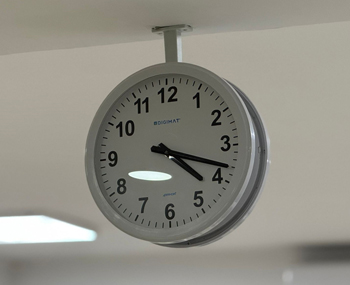
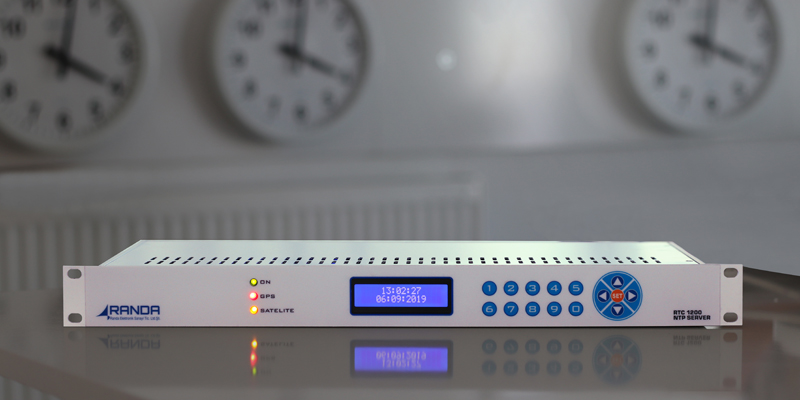
Digimat synchronized clock systems operate by transmitting the time information received via GPS by the master clock unit to all connected secondary clocks. This ensures that all secondary clocks display the exact same time simultaneously. The synchronized secondary clocks are grouped with the master clock using either wired or wireless technologies.
Traditional, manually adjustable, non-synchronized clocks gradually drift from the correct time at different rates. After a relatively short period, they may all display significantly different times. Correcting independent secondary clocks can be a time-consuming task that must be performed regularly.
Once installed and properly configured, the secondary clocks included in a synchronized clock system require almost no maintenance — unlike independent clocks that demand frequent adjustments. The ability to configure secondary clocks to display different time zones also makes them ideal for businesses and meeting rooms.
Power outages or malfunctions can cause non-synchronized clocks to display incorrect times, requiring each clock to be corrected individually. Synchronized clock systems, however, automatically receive the correct time from hardware references such as GPS. Within a few minutes after power is restored, the secondary clocks receive the time signal from the master clock unit and resume synchronized operation.
Perhaps the most useful feature of a synchronized clock system is its scheduling capability. Some master clock units include relay features that allow integration with other systems such as bells, alarms, heating, and air conditioning. These relays can be programmed to ring bells, trigger alarms, or control heating and cooling systems at specific times. Separate programs can be set for each event, helping organizations operate more efficiently and proactively.
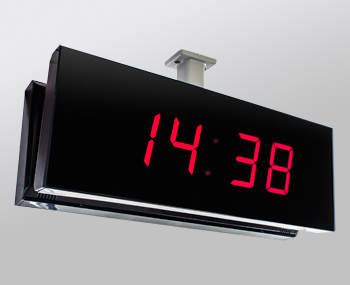
Digital secondary clocks can display time, date, and temperature information. The system does not require any computer connection to operate.